
Deadwood Removal: Why It Matters on Oahu
Dead branches don't just look bad — they're a safety hazard. What deadwood removal is, why it matters, and when to schedule it.
· 5 min read
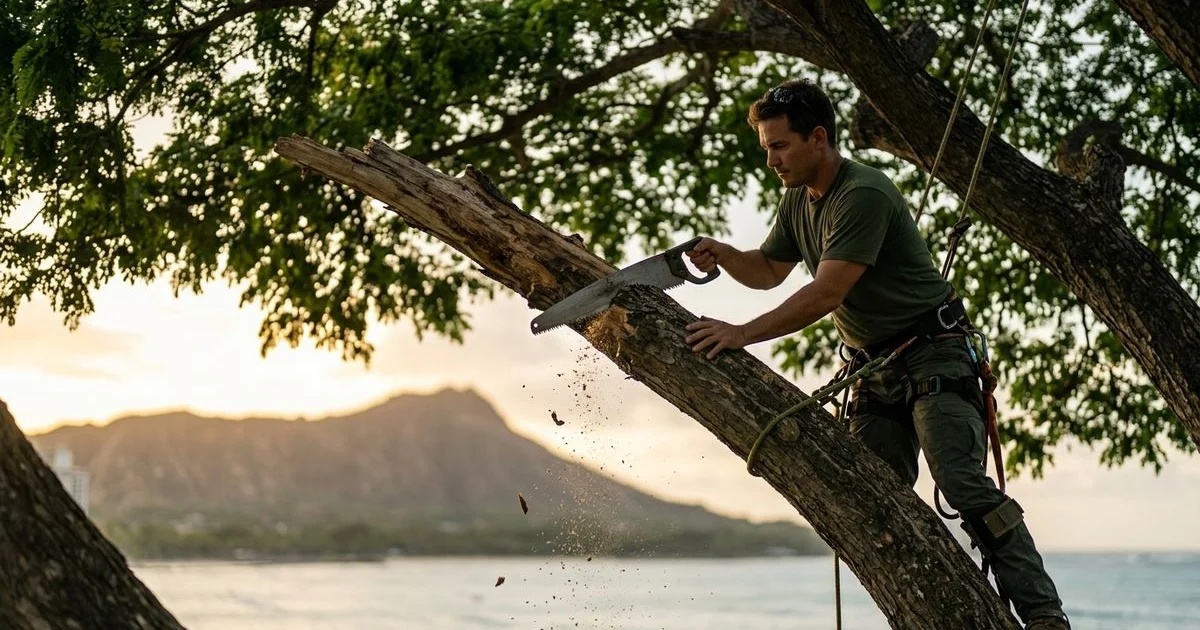
We often hear from property managers who are surprised when perfectly healthy-looking trees suddenly drop massive branches. From what we see in the field, neglected maintenance for deadwood removal trees is almost always the culprit.
A standard tree trimming visit handles this naturally. We consider proactive deadwooding pruning the most cost-effective insurance policy you can buy for your landscape.
Skipped for years, these decaying limbs become the leading cause of unexpected property damage.
What Deadwood Is
Deadwood refers to any branches in the canopy that are dead, dying, or diseased. These limbs lack the vital green cambium layer under the bark, making their wood dry and brittle.
We see this natural process happen every year. Even healthy trees shed small branches outcompeted for light or larger limbs damaged by storms.
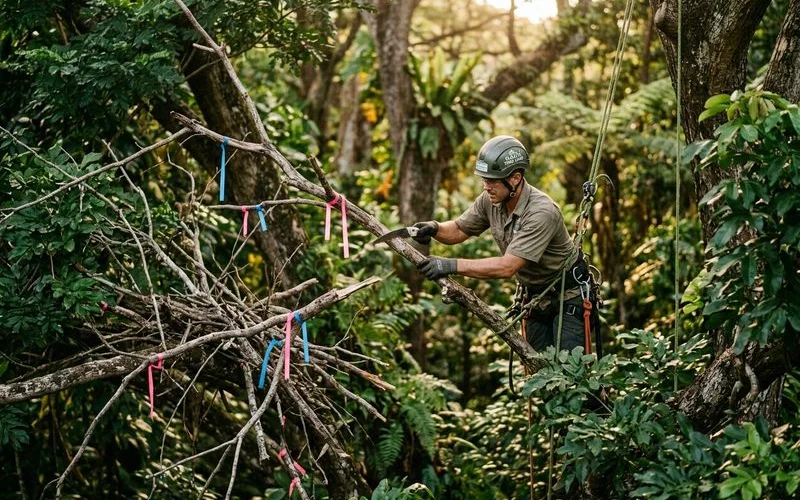
We follow the International Society of Arboriculture (ISA) guidelines, specifically the ANSI A300 standards, to identify and address these hazards. Proper dead branch removal focuses on targeted cuts to eliminate this brittle wood without harming the living tree.
Why It Matters
Safety
The primary reason for this service is preventing sudden limb failure. Dead branches lack the flexible green wood of living limbs, so they break easily under their own weight.
We often see the consequences directly during the Central Pacific hurricane season. A sudden spike in intense Koolau trade winds, like the severe storms that blocked Kalakaua Avenue in early 2026, easily snaps these rigid branches with zero warning.
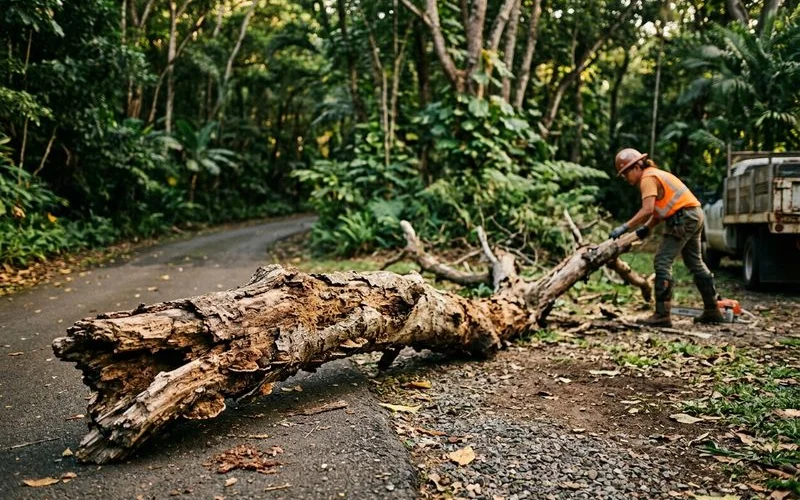
We know that a 12-foot dead limb falling 30 feet onto a car or roof is a serious financial and physical hazard. Regular maintenance prevents these expensive accidents.
Tree Health
Decaying wood acts as a magnet for aggressive insect pests and fungal infections. These invaders use the dead tissue as a bridge to attack the healthy parts of the plant.
We have seen a surge in pest activity across Oahu, making immediate intervention critical. For example, the invasive Coconut Rhinoceros Beetle actively seeks out decaying palm material to breed, while horned powder post beetles target dying hardwood.
We protect your landscape by removing these entry points early. Eliminating deadwood stops these pests before they spread into living wood.
Aesthetics and Light
Brittle, leafless branches make a tree look sick even if the root system is perfectly fine. Removing them immediately cleans up the silhouette and boosts curb appeal.
We find that this simple cleanup greatly increases the amount of natural sunlight reaching the ground. Increased light penetration allows your lawn and understory plants to thrive.
We highly recommend this service for commercial properties looking to maintain a clean, professional appearance. A neat canopy shows tenants and customers that you care about the property.
Easier to Manage at Each Visit
Routine care takes significantly less time and money than dealing with years of neglect. An annual deadwood inspection usually requires only 5 to 10 minutes of targeted pruning per tree.
We compare this to properties that skip maintenance for six or more years. Those neglected trees can require two to three hours of dangerous, labor-intensive extraction per tree.
We charge substantially less for a quick annual cleanup than for a massive restorative pruning job. The brittle wood in a neglected canopy is also much harder for crews to handle safely.
How Much Deadwood Is Normal?
A small amount of seasonal deadwood is completely normal for mature trees. Species like monkeypod, banyan, and mango naturally shed small, shaded-out twigs every year as part of their growth cycle.
We use specific industry standards to separate normal shedding from hazardous decay. The ANSI A300 pruning standard helps define exactly what size of dead branch requires professional removal.
We created this quick guide to help you identify when a tree needs immediate attention.
| Deadwood Characteristic | Normal Shedding | Requires Professional Action |
|---|---|---|
| Branch Diameter | Under 1 inch | 1.5 to 2 inches or larger |
| Location in Canopy | Deep interior (shaded out) | Over walkways, driveways, or roofs |
| Distribution | Scattered evenly | Clustered in one specific section |
| Pest Presence | Clean, dry wood | Visible beetle exit holes or fungus |
If you walk under a tree and look up regularly, you will notice these changes quickly. Multiple dead branches concentrated in one spot often signal localized disease or storm damage. We suggest taking a quick look at your canopy after every major wind event.
When to Schedule
The best time to schedule an inspection is right before the Central Pacific hurricane season begins in June. Getting ahead of the high winds ensures your canopy is strong and resilient.
We structure our maintenance plans around the specific risks facing your property. According to 2026 industry data, routine deadwooding costs between $250 and $950, depending on the canopy size.
We compare this to emergency tree removal after a failure, which easily exceeds $1,500 per tree. Here is a timeline to help you plan:
- Healthy mature trees: Schedule an annual inspection to remove minor deadwood, even if no major reshaping is needed.
- Trees near structures: An annual check is non-negotiable for liability and safety reasons.
- Post-storm recovery: Check for hanging or newly cracked branches within two days of a high-wind event.
- Declining trees: Inspect every six months, as tree deadwood Hawaii accumulates rapidly in sick specimens.
This service is usually the most cost-effective visit on the calendar. It offers a quick, focused, and low-volume solution. We view it as the highest-value appointment for long-term property safety.
Bottom Line
Deadwood happens naturally, but ignoring it is a choice. Removing it routinely keeps your landscape safe, healthy, and easy to manage.
We encourage property owners to handle this maintenance early. Skipping it for years turns a quick, inexpensive task into a major intervention.
We recommend booking an annual inspection as the simplest way to protect your investment.
Schedule your assessment today to keep your trees in top shape year-round.
Common Questions
What is deadwood removal?
Why is deadwood dangerous?
How often should deadwood be removed?
Related Guides
Best Time of Year to Prune Trees in Hawaii
Hawaii's tropical climate changes pruning timing. When to thin canopies for storm season, when to prune for flowers and fruit, and when to wait.
Crown Thinning vs Crown Raising
Crown thinning and crown raising solve different problems. When each is appropriate, what they do for the tree, and how to ask for the right service.
How Often Should You Trim Trees in Hawaii?
Hawaii's year-round growing season changes everything. How often to trim trees on Oahu by species, location, and goal.
Tree Trimming Cost Honolulu
What drives tree trimming cost on Oahu — tree size, canopy density, access, and trimming frequency. Typical ranges and how to compare quotes.
Ready for Expert Tree Care on Oahu?
ISA-certified arborists, transparent pricing, and 24/7 emergency response. Get a free on-site quote today.