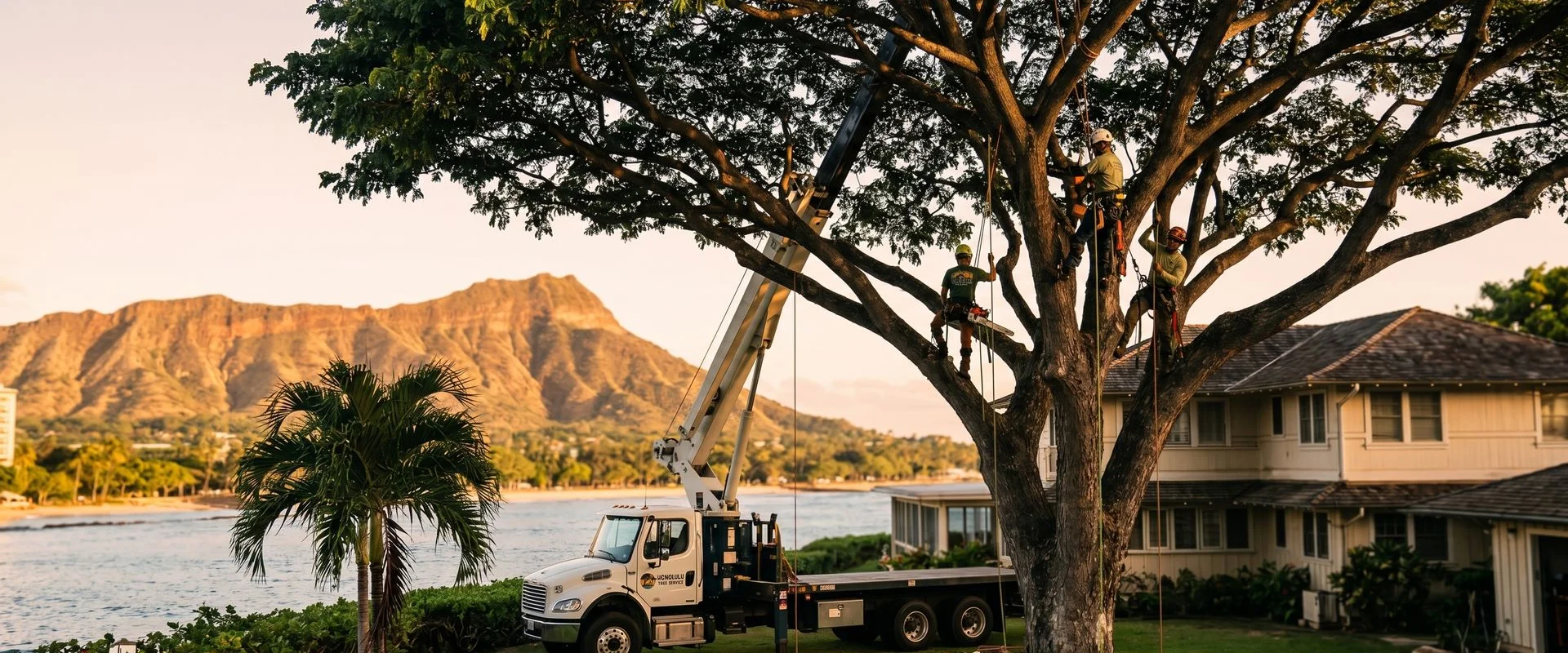
Crane-Assisted Monkeypod Removal in Hawaii Kai: A Hazard Job Done Without Touching the House
A Hawaii Kai homeowner called us after the trade winds picked up one weekend and a 60-foot monkeypod started shedding limbs onto the lawn. The trunk had a clear lean toward the single-story roofline, and the canopy was sitting directly over the master bedroom. This was a textbook case for tree removal using a crane rather than traditional climbing techniques.
This post walks through how our team assessed the job, why a crane was the safe call, and what the property looked like after we wrapped up.
The Site Walk
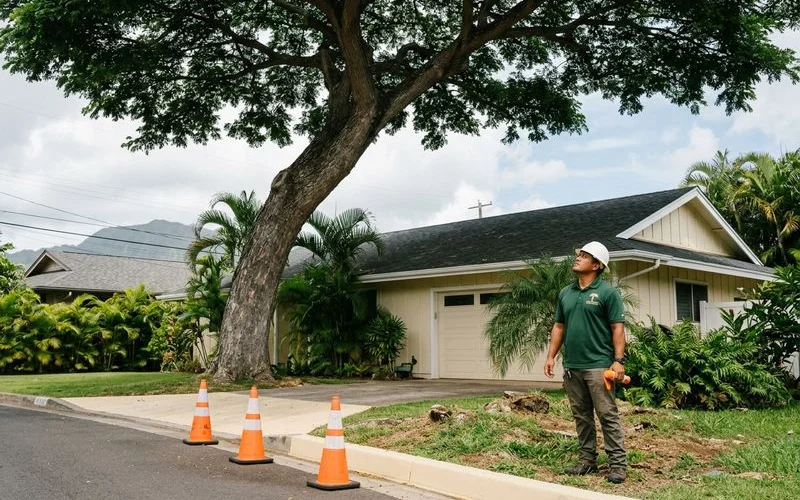
The first thing we do on any leaning canopy is a slow walk-around with the homeowner. We look at three things: lean direction, root plate condition, and the drop zone for any failed limb.
In this case the lean was about 12 degrees off vertical, the root flare on the uphill side was lifting, and the only clear drop zone was a 6-foot strip of grass between the house and the property line. There was no room to fell the tree in sections from a climber’s saddle without swinging large pieces toward the roof.
Why Crane and Not Climber
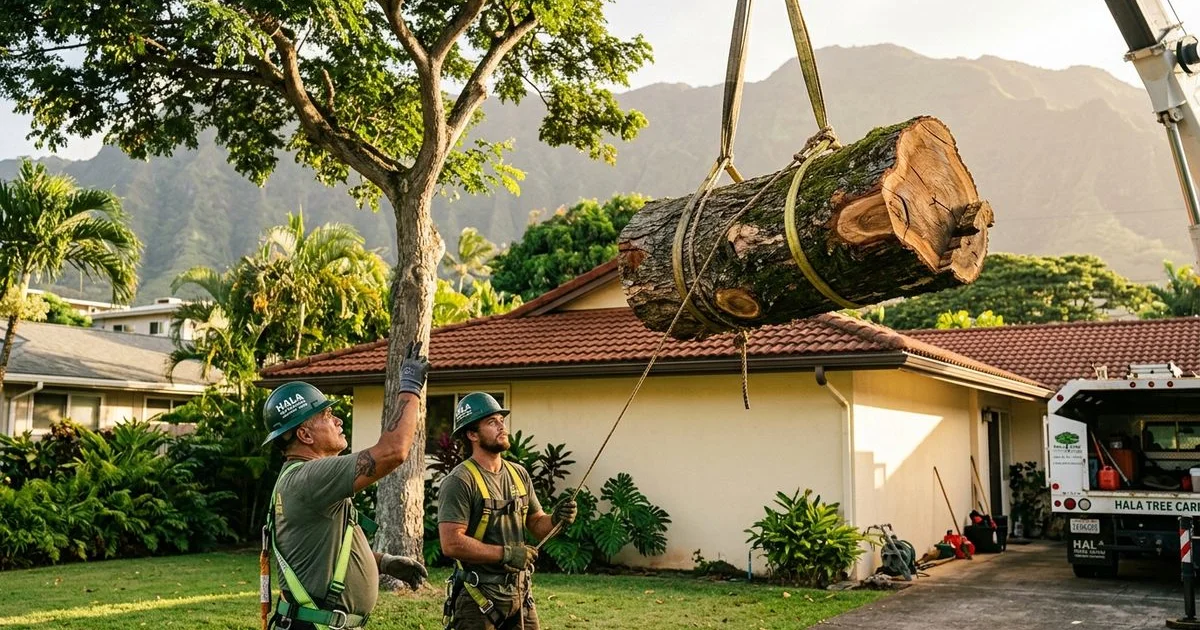
We use cranes for three reasons on residential takedowns. First, the cuts are made under tension, so each section is held in place before it leaves the trunk. Nothing falls. Second, we can lift sections straight up and out, away from the roof, instead of rigging them down through the canopy. Third, the work moves faster, which means less time with traffic cones in front of the house and less neighborhood disruption.
For this property in particular, the crane let us pick limbs up and over the house, then place them in the front driveway where our chipper was staged.
Rigging the Cut
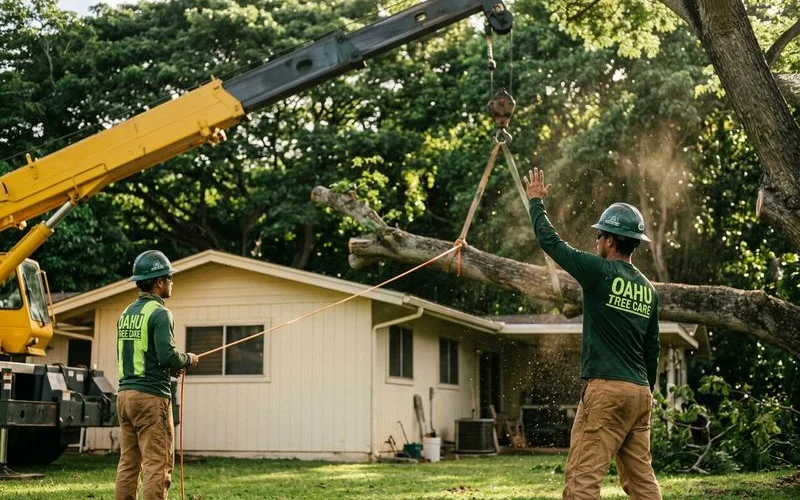
We worked top down across one full day. Our climber set rigging straps on each major leader, the crane operator took up tension, and only then did the cutter make the release. Each section was lifted clear of the structure, swung out over the front yard, and lowered onto the driveway for breakdown.
Every cut followed ANSI A300 pruning standards, and every crew member on the ground worked under ANSI Z133 safety protocol. The homeowner stayed inside during active lifts, which is something we ask of every client on a crane job.
Cleanup and Result
The trunk came down in three sections. Stump and surface roots were ground out the next morning. Brush was fully chipped onsite, debris was hauled, and the lawn was raked clean of sawdust before our crew left.
The homeowner sent us a 5-star Google review the following week. The relevant line: “They removed a massive monkeypod leaning over our roof without touching the house. The crane work was incredible and the crew cleaned up everything.”
What This Means for Hawaii Kai Property Owners
If you have a mature canopy tree leaning toward your home, do not wait for a storm cell to make the decision for you. Get an ISA-certified arborist on the property for a free assessment. We cover all of Hawaii Kai and respond to emergencies across the island 24/7.
A crane removal sounds dramatic, but on the right job it is the safest option for the structure, the crew, and the neighbors. We bring one in any time the geometry of the cut, the drop zone, or the species behavior tells us it is the right tool.
Reach out for a free on-site quote and we will tell you straight whether your tree needs a crane, a climber, or just a structural prune to ride out hurricane season.